Asian vs India info security culture


Privacy by Design, Compliance by Default: DevSecOps Strategies for the DPDP Act
Written by : Purplecop
Last updated on May 11, 2026
Privacy by Design, Compliance by Default: DevSecOps Strategies for the DPDP Act
Written by : Purplecop
Last updated on May 11, 2026
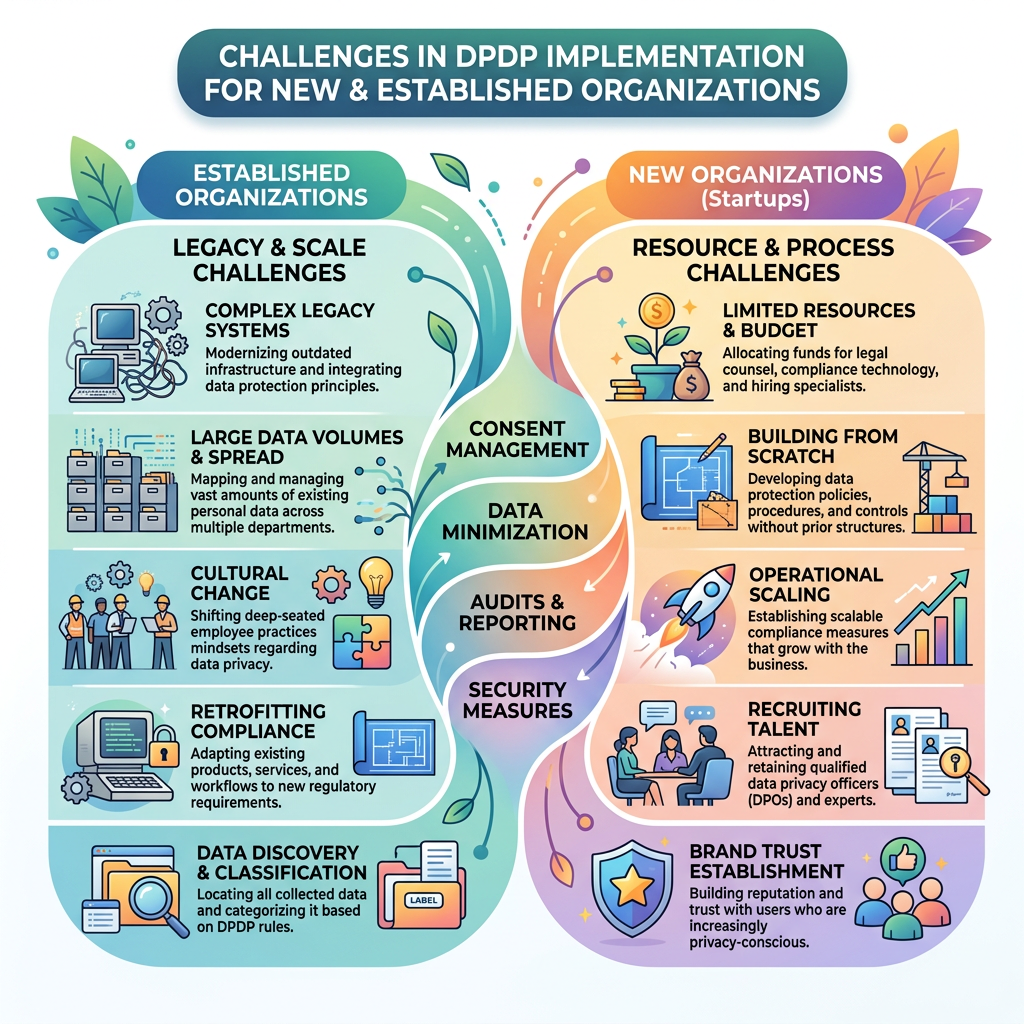
For Indian engineering leaders managing cloud-native fintech workloads and API ecosystems, the DPDP Act 2023 is more than a legal mandate—it’s a fundamental architectural shift. Organizations process highly sensitive information, such as Aadhaar and PAN-linked KYC data. Yet many still manage this complexity through Excel-based risk registers and periodic audit firefighting. When privacy is treated as a retrospective checklist rather than an engineering standard, it creates dangerous security blind spots and repeated questionnaire fatigue. Retrofitting compliance ultimately delays software delivery and slows enterprise sales cycles.
To scale securely without bottlenecking deployments, teams must adopt proactive DevSecOps compliance strategies. Consider this approach to your DPDP Act 2023 technical guide: transition away from reactive patching and embed data protection directly into your software development lifecycle. Implementing Privacy by design DPDP means that privacy controls are no longer just policies documented on paper. Instead, they become default technical guardrails—such as mandatory encryption and access restrictions—enforced from the very first line of code and integrated seamlessly into CI/CD pipelines.
Manual tracking simply cannot keep pace with the reality of modern, multi-tenant SaaS architectures. Cloud environments are inherently dynamic; spinning up a new microservice or modifying an IAM role can easily expose personal data if secure defaults aren't strictly enforced. Surviving this ecosystem requires Continuous compliance monitoring SaaS that mitigates human error. It demands an Automated privacy configuration that constantly audits your infrastructure, ensuring that data protection is the default state of your applications rather than a fleeting, point-in-time milestone.
Implementing these DevSecOps principles requires tooling built for regulated environments. Purplecop One functions as a full-stack risk observability and compliance automation platform. It operationalizes DPDP requirements through concrete technical capabilities: Deep Cloud Diagnostics: The platform executes over 200 CIS-based checks to instantly detect public storage buckets and IAM misconfigurations across AWS, Azure, and GCP. Integrated Controls Framework: It maps a single technical control across DPDP, SOC 2, ISO 27001, PCI DSS, and RBI guidelines. This architectural alignment drives a 60-70% reduction in manual compliance workloads. Continuous Monitoring: By providing real-time risk heatmaps and tracking DevOps remediation workflows, it ensures continuous regulatory governance. Conclusion: Engineering Velocity Meets Continuous Compliance Regulatory mandates shouldn't be speed bumps for your delivery pipeline. By abandoning manual spreadsheets in favor of automated, secure-by-default DevSecOps workflows, your engineers can focus on building exceptional products instead of firefighting audits. Integrating continuous risk monitoring and cloud diagnostics ensures that your infrastructure remains secure, compliant, and agile by design.
For Indian engineering leaders managing cloud-native fintech workloads and API ecosystems, the DPDP Act 2023 is more than a legal mandate—it’s a fundamental architectural shift. Organizations process highly sensitive information, such as Aadhaar and PAN-linked KYC data. Yet many still manage this complexity through Excel-based risk registers and periodic audit firefighting. When privacy is treated as a retrospective checklist rather than an engineering standard, it creates dangerous security blind spots and repeated questionnaire fatigue. Retrofitting compliance ultimately delays software delivery and slows enterprise sales cycles.
To scale securely without bottlenecking deployments, teams must adopt proactive DevSecOps compliance strategies. Consider this approach to your DPDP Act 2023 technical guide: transition away from reactive patching and embed data protection directly into your software development lifecycle. Implementing Privacy by design DPDP means that privacy controls are no longer just policies documented on paper. Instead, they become default technical guardrails—such as mandatory encryption and access restrictions—enforced from the very first line of code and integrated seamlessly into CI/CD pipelines.
Manual tracking simply cannot keep pace with the reality of modern, multi-tenant SaaS architectures. Cloud environments are inherently dynamic; spinning up a new microservice or modifying an IAM role can easily expose personal data if secure defaults aren't strictly enforced. Surviving this ecosystem requires Continuous compliance monitoring SaaS that mitigates human error. It demands an Automated privacy configuration that constantly audits your infrastructure, ensuring that data protection is the default state of your applications rather than a fleeting, point-in-time milestone.
Implementing these DevSecOps principles requires tooling built for regulated environments. Purplecop One functions as a full-stack risk observability and compliance automation platform. It operationalizes DPDP requirements through concrete technical capabilities: Deep Cloud Diagnostics: The platform executes over 200 CIS-based checks to instantly detect public storage buckets and IAM misconfigurations across AWS, Azure, and GCP. Integrated Controls Framework: It maps a single technical control across DPDP, SOC 2, ISO 27001, PCI DSS, and RBI guidelines. This architectural alignment drives a 60-70% reduction in manual compliance workloads. Continuous Monitoring: By providing real-time risk heatmaps and tracking DevOps remediation workflows, it ensures continuous regulatory governance. Conclusion: Engineering Velocity Meets Continuous Compliance Regulatory mandates shouldn't be speed bumps for your delivery pipeline. By abandoning manual spreadsheets in favor of automated, secure-by-default DevSecOps workflows, your engineers can focus on building exceptional products instead of firefighting audits. Integrating continuous risk monitoring and cloud diagnostics ensures that your infrastructure remains secure, compliant, and agile by design.